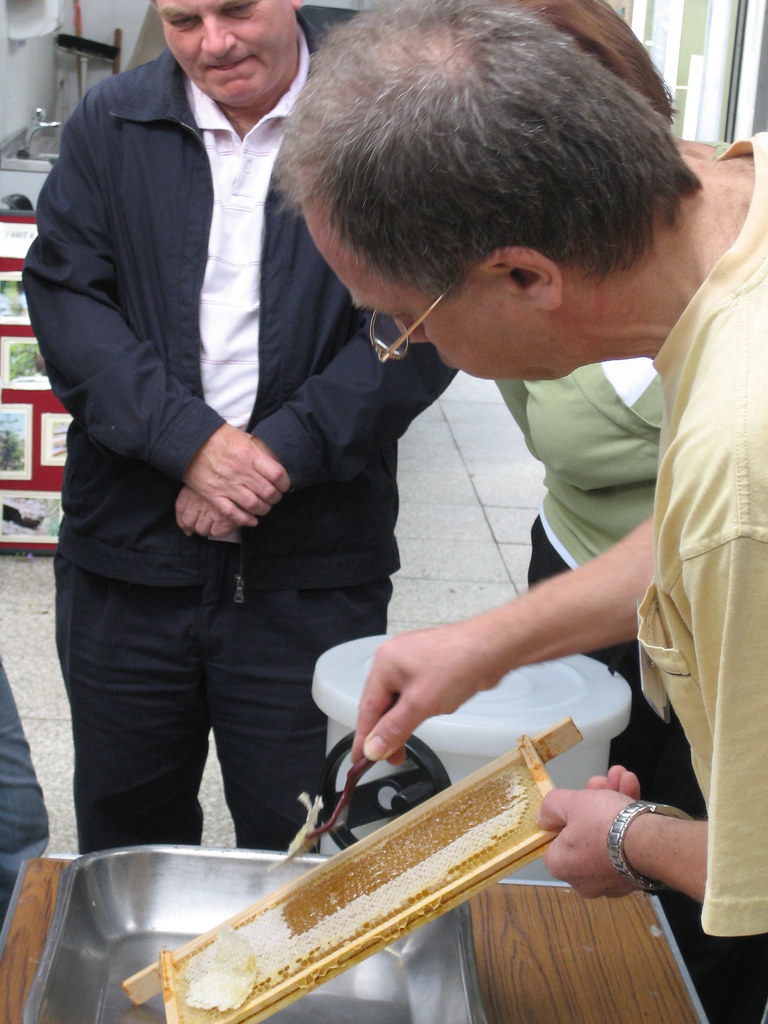
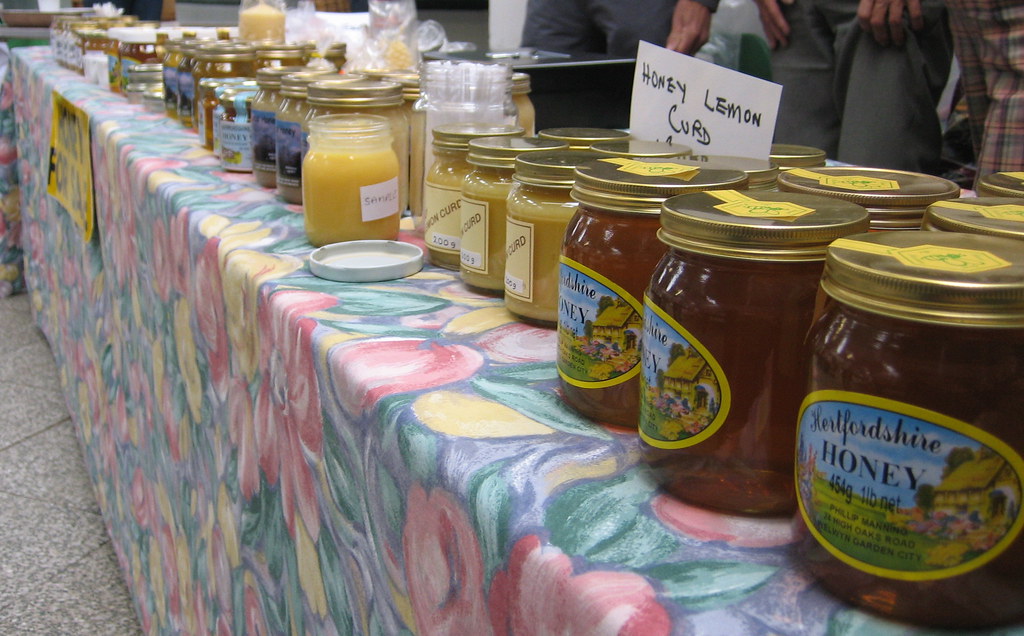
BuzzWorks - Hitchin Bee Centre by Robin Dartington

The group continues to meet each Saturday to build the Bee Centre – joined now by John Symes, bringing us to six regulars drawn from Stotfold in the north down to Barnet in the south. There is always a job to do!

Eight colonies are set aside for the move. Somewhat disturbingly however, three of my colonies (of 20) have dwindled to nothing since supers were removed in August, leaving combs full of winter stores but only a fistful of bees and a small patch of sealed brood. These are similar symptoms to those for CCD as reported in US. Let us hope it is some minor local problem, not indication of a major problem in Hertfordshire.

The site plan develops steadily, each revision getting us closer to a convenient and economical layout. WREN only grant projects open to the whole public at least 104 days a year. As mentioned earlier, the Plant Nursery failed the test – so its public availability has been upgraded to allow visitors to plant seeds of bee plants that they can later plant out in the garden. Some children, especially flat dwellers, have no opportunity to garden in any way and can miss out on a vital experience while growing up. A smaller area is still provided as the service area (eg dustbins). The Demonstration Platform is now proposed as a Market for sale of both honey and allotment surpluses, strengthening the bond with the allotment gardeners. The museum is upgraded to a ‘Discovery Centre’ – ambitious, as designing an interactive bee gallery will take more time and a further grant but fun to do and it will turn the site into a true ‘visitor attraction’.

Success with the grant depends crucially on showing wide support from the general public, in addition to specific groups such as schools and beekeepers. So a petition has been launched in Hitchin’s historic Market Place on Apple Day. Leafleting 200 nearby homes attracted the local herbalist and a special needs teacher to offer help over approaching the church and Guides groups – one step leads to another. Local shops, community centres and schools will also be asked to collect names from visitors / parents.

We would now like to ask Hertfordshire beekeepers to express individual support by signing the petition at winter meetings. We are not asking anyone for money, only support for opening the site to the public in 2008. If preferred, please email robin.dartington@btinternet.com saying simply: ‘I support opening ‘BuzzWorks’ in 2008’ and giving your name and address. The Brochure is available by email or post for anyone who wants to check the details of the current proposal and the Site Plan is shown below.

St Albans news by Anne Wingate

Our next meeting is on MONDAY 12th November (the only available date) at 8 pm at the United Reformed Church, Watford Road, Chiswell Green.

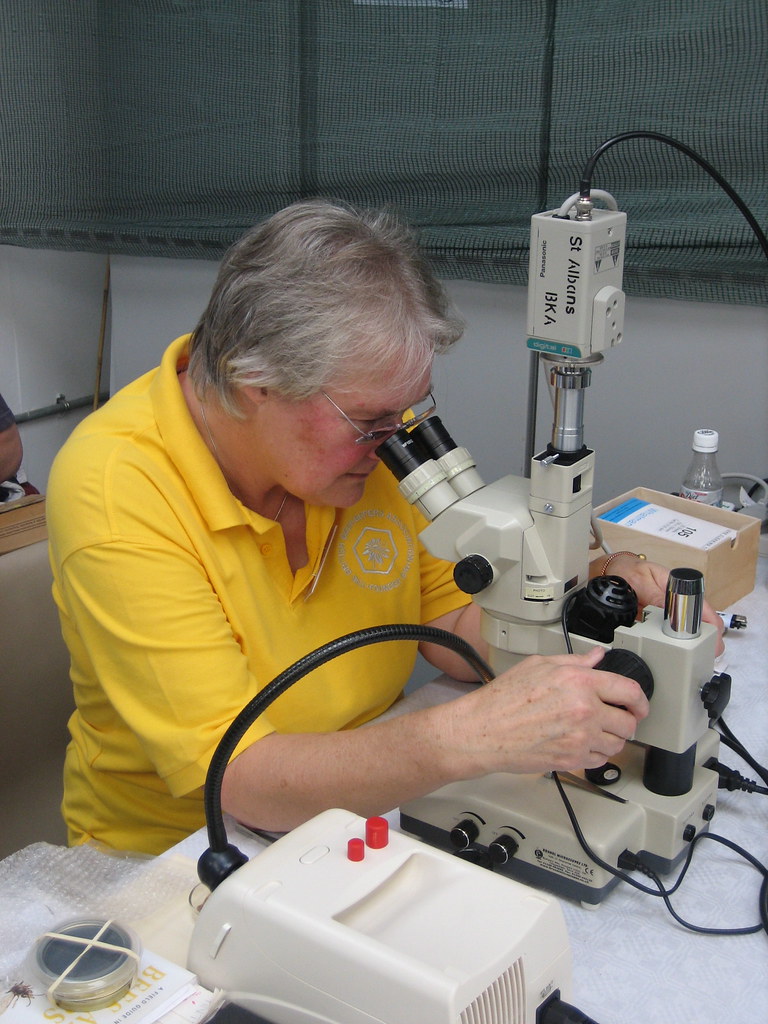
The subject 'Anatomy of the Honey Bee' will be revealed via the microscope and monitor. See picture on Page 2 in October's Herts Bees. This should be a very interesting evening.

The December meeting will be at 8pm on Friday 7th December at the above address. This meeting will be 'Honey Tasting' followed by Social Evening. All you need to bring is a 1lb jar of liquid honey produced by your bees.* If you have no honey please come to taste and enjoy the many different flavours produced by other people's bees. On 12th November I will be giving basic advice about how to prepare honey from granulated to liquid. Or, you can hear an expert honey judge speak at the North Herts Meeting on 13th November - see October's edition of Herts Bees for details.

* Along with your jar of honey please bring a plate of finger food which we will share together. Your spouse/partner are welcome to join us.

Please remember to return your membership renewal forms by 16th November to qualify for the £10 reduction!

National Honey Show by John Mumford

The National Honey Show normally marks the end of the beekeepers year, a time to catch up and meet old friends, and look around the bee book stalls for something to read over Christmas.

The number of entrants, and the number of entries this year were about the same as last but it seems that the standard of some of the entries could have been better - only a VHC in Class 1 out of 13 entries! It has been a difficult year for beekeepers generally and honey takes have been very variable in Quantity and Quality (water content too high!).

There are moves to try to find a new venue for the Honey Show but nowhere is going to be perfect. It takes me just half an hour to get there by car and the easy parking is entirely FREE. The food and beverages are at Motorway Prices, but there are ample provisions inside to consume your own, and if you get bored with the Honey Show then the RAF Museum is Free and very interesting.

William S. Mundy stepped down as President after 50 years in the job and was presented with a Certificate to acknowledge his valuable contribution to the show. Dr. H. R. C. Riches (Middx.) was then elected as the new President.

South East news by John Mumford

The Harvest Supper was well attended, and I trust enjoyed by all. Many Thanks to those who helped with the organisation and preparation of the event, and to those who donated Raffle Prizes. The Skillman Shield went to Gordon Lake for his Jar of honey.

The Winter Meeting to be held on Thursday 15th. November at the Hoddesdon Baptist Church Hall will be centred around Varroa, Varroa related problems, and Varroa Treatments. Our newer members, and those who completed the Beginners Course in the Spring and now have bees of their own have asked for more information on the subject.

As I sit writing this report I am looking out over the remains of a heavy overnight frost - Autumn is definitely here. There is nothing much beekeepers can do from now until the Spring to assist their bees except put on blocks of candy if it is necessary to feed, but once started they have to be continuously renewed.

North Herts news by John Hill

Once again, bees tucked up for the Winter apart from a final ‘dribble’ of Oxalic Acid Solution in December? They seemed to have gained some strength in the last two months or so, and they certainly took the feed syrup down with enthusiastic gusto! Let’s hope the forthcoming Winter months are not too severe, and Varroa don’t get the upper hand in early Spring. Things tho’ never turn out to be as you expect them to be..… such is life!! (Keep taking the tablets!).

We had an extremely good turn out at our first meeting of the Autumn period, when 20 members listened to Andy Wattam, the Regional Bee Inspector, give a lively talk on “Integrated Pest Management Relating to Bees”. This title sounds an awesome one, but the review that Andy gave covered, in a very light-hearted manner, was a complete gamut of the examination and treatment of the various diseases and pests associated with our “hobby”. His ‘Rogue’s Gallery slides were of high quality and very informative. All who attended, I’m sure, were extremely grateful for Andy coming all the way from Loughboro’ on a rather ‘dirty night’ to entertain us and share his knowledge with us. Considering that the postal-strike was in force, which preventing members receiving their ‘Newsletter’ in time, the turn-out was commendable,... (thanks to the many ‘phone calls our Chairman made).

Now to Details of our next Meeting: As usual on the second Tuesday in the month, viz: November 13th at the Friends’ Meeting House, Letchworth, at 7.30 p.m. start we are welcoming Martin Buckle from Beds. Association to talk to us about “Bottling, Labelling, and Exhibiting Honey”. Members are especially asked to bring in a sample of their produce for “constructive criticism”. “Bring a Jar and Learn a Lot”!! It is hoped too that at this next meeting we shall have some information about the Christmas Party,... at a ‘straw poll’, held at the October meeting, there was quite a response for one!!!

After the November Meeting, there will be a break until after the New Year, with the next one to be held in Letchworth in February 2008 (the 12th to be exact). So mark the date in your new diaries.

Now the answer to last month’s ‘Teaser”...the blunder in Shakespeare’s Twelfth Night:---- ‘The identical twins Viola and Sebastian are different sexes. This is impossible!!!

Here’s this Month’s teaser. “A mother only has five potatoes, but six children to feed. How can she feed them equal amounts of potatoes without any using fractions?”

Now here is a couple of verses by Walter de la Mare from his poem called trees, there are four short verses but I relate here the first and last:
Of all the trees in England,
Her sweet three corners in,
Only the Ash, the bonnie Ash
Burns fierce while it is green

Of all the trees in England,
Oak, Elder, Elm, and Thorn,
The Yew alone burns lamps of peace
For them that lie forlorn.
I must admit I do not understand the meaning of the last two lines, I would be interested to learn from anyone who reads this to advise please. Perhaps it is because the Yew of course dwells in Churchyards where people ‘lie forlorn’? But why ‘burns lamps of peace’?

Bee students?

Someone from the Royal Veterinary College near Potters Bar has approached HBKA to find out whether some of the students could visit our apiaries to learn about bee health problems. Foot & Mouth and Bluetonge have made farm visits impossible. He was wondering if any HBKA members would like a visit by 2 or 3 final year students who would look at preventive measures or alternate treatments to bee problems. The format would be that the students would visit for an hour or so (at the convenience of the owner) either on a Monday afternoon /evening or on a Tuesday. They would use the resources of the college to examine /identify the problem and send a report to the owner by the following Tuesday. The owner may attend the presentation the students give to the relevant staff on the Friday following the visit.

If you are interested then please contact me for further details.

St Albans news by Anne Wingate

I hope all your colonies are now settled for the winter. Time to take a breather before you start with the lectures which will be at the United Reformed Church, Watford Road, Chiswell Green, St Albans at 8.00 pm. 26th October. The topic is "Swarming", come and listen, and give us your first year's wisdom on the subject!

Me And My Solar by Roy Cropley

The best and easiest way of recovering wax from old combs is by using the solar wax extractor. Like all aspects of beekeeping it is open to criticism but I would not be without one. The question arises whether it is worthwhile trying to get wax from old combs. Since a comb starts life with only an ounce or so of wax that is all each old comb will produce.

Old comb should be replaced regularly. A good start to the year is to put the bees on to foundation and feed with sugar syrup. Without all the work of dealing with old pollen, solid honey and millions of bacterial and disease pathogens the bees will soon build up a strong colony. Some beekeepers extol the virtue of old combs and boast their age. We are told not to use old combs from an unknown source but our own could quite well be unreliable. The modern thinking is to get rid of them and replace them with new. Some work is involved but it will soon repay itself. When the old brood chamber is replaced at the end of March some brood will be lost. I find this hard to bear but it is worth it. Gone will be most of the varroa together with the other nasties that plague our bees. There may be combs from colonies that have died out. I don't use those again but recover the wax.

Each beekeeper will have a way of disposing with old wax. One man tells me he puts it in a dustbin so it goes to landfill - not something I approve of. Another has a bonfire.. And it can be buried in the garden.

I put my old combs, four at a time, into a piece of net curtain and into the solar wax extractor. Then I pray for sun. It is fascinating to know that sometimes in the summer we go for days without sunshine. And then we get a spell when I can refill the extractor more than once in a day.

I am always amazed at how clean the wax is even from old black combs. It comes out a beautiful yellow colour with a pleasant smell with little pollen and propolis. The residue of moulted skins and pollen, called slumgum, still contains a fair bit of wax which is not economic to extract. This burns very well on the coal fire. There are firms abroad that will buy it.

When there is wax in the recepticle it is removed when cool; I pour boiling water over the upturned container. I get lots of misshapen bits of wax, some small. The important thing is their colour. I wash the honey from the wax and let it dry. Some solars have mild steel or tinplate parts which soon go rusty and impart a greenish colour to the wax. Stainless steel or aluminium are best.

It is a mistake to leave the solar wax extractor for several days and allow the collected wax to heat and cool several times. This gives an inferior wax, dark in colour and of poor texture. It is still usable but not so good as that obtained after each day of sunshine.

I not only recover wax from my own old brood combs; I also buy wax from other beekeepers. For best quality blocks I pay £1.50 a pound, more than the firms that buy wax. I exchange wax for foundation with the firm KBS run by Peter Kemble in Hastings who produces the best foundation in the country. I sell his foundation at about 30% less than catalogue prices. Sometimes I am asked if I want wax which has gone mouldy. My answer is yes. I will melt it in rain water, filter and allow it to cool in an insulated box for several hours. The block will be free of honey and pollen. It is not attractive to bees and will not go mouldy. Wax moth do not attack clean wax. Wax chandlers store theirs outside. I am often offered wax complete with mouldy pollen and wax moth. If the bees have had nosema or any other disease this will not be present in the foundation made from it. Even AFB spores which are not killed when the foundation is made are rendered inactive. Bees cannot contract any disease from foundation. A few beekeepers spread alarm by saying that medication used to treat varroa finds its way into foundation. My answer is 'Not Proven', And when you see how a shook swarm works foundation if fed there is no case to answer.

If you have a solar then use it. Empty the recepicle each time it has collected any wax. Don't worry about shape or size; the important thing is not to leave and honey in the pan to reheat. Find all the old wax in your shed and we can put it to use. You can trade directly with KBS, or see me at the Essex Conference or call on ☏.

SE Herts news by John Mumford

The September Association Apiary Meeting I am told was well attended, and the bees found in fine fettle. Laying Queens and plenty of stores should see them through the most severe winter. They have now been given their Thymol Treatment. One is showing signs of a high mite population (deformed wings) but I’m sure they will come through OK. I am now half way through extracting their honey which will be about 100lbs. Any members wishing to purchase some honey in tubs or jars should give me a ring. The surplus is not bad for such a difficult year with so much swarming going on. I was bringing bees back from the North York Moors and so unable to attend the meeting myself.

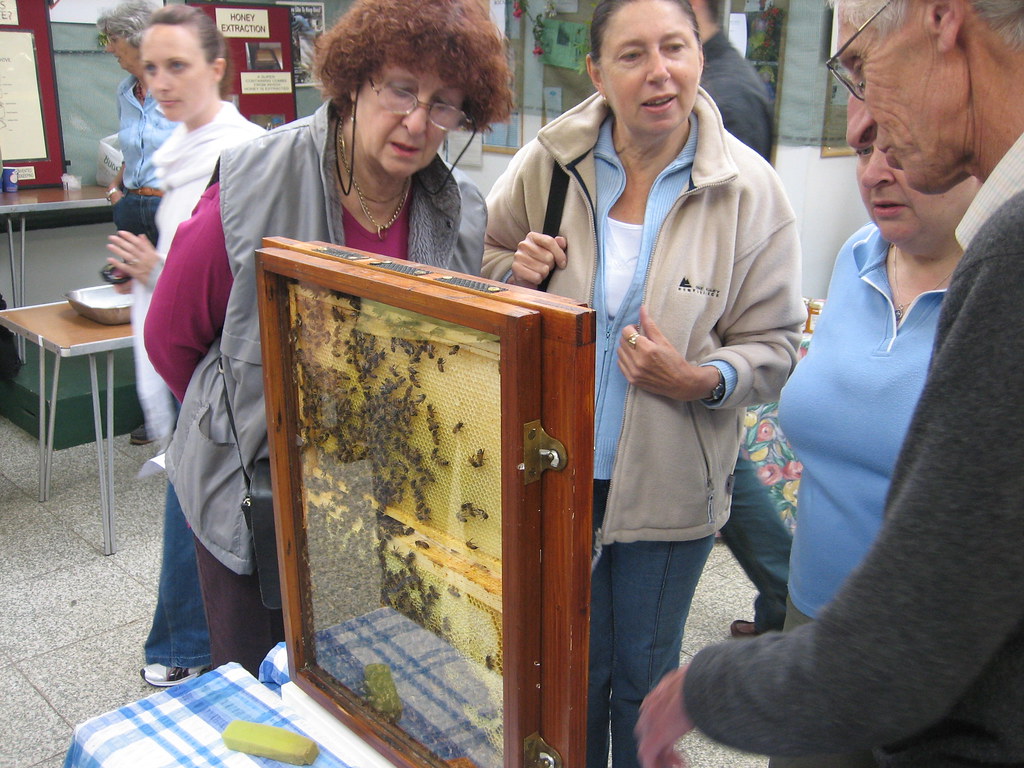
I was please to get such a good response to my request for help with the Bee World event. Phil Amer, John Dockerill (a new member who has no bees at present), Andrew Watters, and Janice Nicholson who is of course a Barnet member, together with those who didn’t let me know they were coming. I trust they all had an interesting and enjoyable day. Denis Osbourne did a very good job of the organizing the event and I am obliged to Alan Lewis for the loan of his Workmate to hold the Observation Hive.

The committee are proposing to run another beginners course at the Hoddesdon Baptist Church Hall on Sundays 17th and 24th February and 2nd, 9th, and 16th March from 2.00pm till 4.00pm. Anyone interested should contact Derek Driver for more details.

The Harvest Supper is on Saturday 13th October at 7.30pm for 8.00pm with carriages at 11.00pm. It is free to members and their partners, and to members children. Visitor £3.00 each. Raffle prizes would be appreciated. Bring along a jar of your very best honey (unlabeled) and compete for the Skillman Shield. Please let Derek Driver (☏) or myself know if you will be attending so that proper provisions can be made.

Erratum – Counting Varroa Mites
I am trying to get to grips with some new technology - a new Computer - with an awkward Word Processor and American Spellcheck, and must correct the piece in last months news letter. Anno Domini I suspect is also partly to blame. The 5th paragraph should read:
“So, if we make an average daily mite count over days 6, 7, and 8 after the treatment is first applied, and we make another average mite daily count over days 18, 19, and 20 after the treatment was first applied and the treatment is refreshed on day 13, the second average divided by the first average will give the SURVIVAL RATIO.”

BuzzWorks (previously the Hitchin Bee Centre) by Robin Dartington

The summer has flown by – and missed the UK almost completely. But it has been a bumper year for honey in Hitchin and the surplus will be useful to raise money for good works. My planned 16 colonies seem to have grown to 29 so there will be surplus bees for the Bee Centre.

The outer shell of the Bee Shed is finished, the interior now needs painting and fitting out. The working group has grown with the enthusiastic contribution of Elaine from Letchworth who wants to take up beekeeping. Her son, Edmund, also wants to become a beekeeping apprentice – a young back is always welcome when it comes to the heavy work!

Elaine putting on the paint

The grant manager has visited and the Museum/Exhibition and Bee Garden appear to fall within the guidelines but not the Plant Nursery, which will now be added to the privately funded Bee Centre. An Operational Plan is needed to show how the obligation for the Museum to be open to the public for 104 days a year will be met. The Council will also need to extend the annual lease, so applying for the grant will be delayed to the end of the year. More time on developing a design is never wasted, but it will be a rush in the spring to get ready for opening at Easter.

A higher quality Museum and Exhibition will take costs of Phase 2 to £20,000 – but the grant lady did not blink. The job is to steer the design closer to the guidelines, not go for cheapness. Luton’s Bee Gallery is an invaluable precedent, to which Beds BKA contributed £2,200.

We have a new name,

’BuzzWorks’
Hitchin’s Community Bee Garden
“where people enter and enjoy the busy world of bees”

It will stand until someone comes up with better! Any ideas, anyone?

Proposed Museum building, 5.4m square

Bee gallery, Luton - by Beds BKA

Wax Moth Bait by Ron Pitt

A bait for trapping wax moth and other undesirables was printed in BBKA NEWS Feb. 2004 p.8 as follows:

1 cup each of water, sugar,vinegar in a lemonade bottle and mix well. Cut a 25mm dia. hole in the bottle just below the shoulder, add a banana and hang head high near the hives.

I tried it this year from Spring to late August and found the contents to be:- 14 wax moths, 12 hornets, dozens of wasps and dozens of various flies all in one gungey mess. It works!
Ron Pitt (Welwyn)

Welwyn news by Peter Mathews

The next Apiary meeting on Saturday 6th October, will be at Peter Folge's parents 23, Canonsfield Road. Welwyn AL6 0PY. Please RSVP to Peter if you wish to attend. The format will be more social and dealing with questions that have occurred during the summer. (☏)

The summer continues to surprise with a swarm at the beginning of September and full supers during the middle of the month. As to when varroa treatment and feeding can be fitted in is an open question. I am hoping to get away with some fast work this month.

A new apiary site has been offered to us. This is in the Danesbury/Potters Heath area of Welwyn and is set in an apple orchard. Let me know if you are interested in putting your hives there. At the time of writing, I have yet to inspect the site. However, I am assured that the location is quite secure and will need key access (provided).

North Herts news by John Hill

“It’s all over bar the shouting”, I suppose that is an apt saying as far as the end of the beekeeping year of 2007 is concerned. (Wondering where the expression comes from?... I’ve just looked it up in Nigel Rees’s recent book “A Word in Your Shell Like” (£8.99 Collins), a book of curious Phrases, and it says that it is of sporting origin, generally attributed to the shouting aspect of the crowd in appealing against the referee (in Boxing), the earliest use of the phrase was used was in 1842).... Now back to “them bees”,..... it’s been a ‘funny old year’;... some of us have had reasonable-to-good yields of honey and others, like me and FE who missed the rape and field beans, have had what can only be described as a disastrous time. Although during the past month or so, the two/three colonies of mine have increased in numbers quite markedly, and have taken down large amounts of syrup feed. I treated them with Thymol/sugar/Pura mixture, as advised... the bees didn’t seem to have taken much notice of it, and now have had a second treatment after two weeks. So much for science! No sign of Varroa whatsoever,.. even before treatment with the “miticide”. The latter means “any drug or agent that destroys mites”, (according to my dictionary ,....found by accident, the word not the dictionary!).

Andy Johnston’s meeting at Shillington was well attended by about 25 beekeepers from both Herts. and Beds. associations. What could be described as a very lively session or two transpired as a number of hives were opened to display the various features and idiosyncrasies of Andy’s techniques. Quite a number of attendees were literally covered by the inquisitive “inhabitants”.

Some wonderful refreshments followed, prepared by Val,... thank you both for making the event so worth while, ... “feed the mind and the body”.

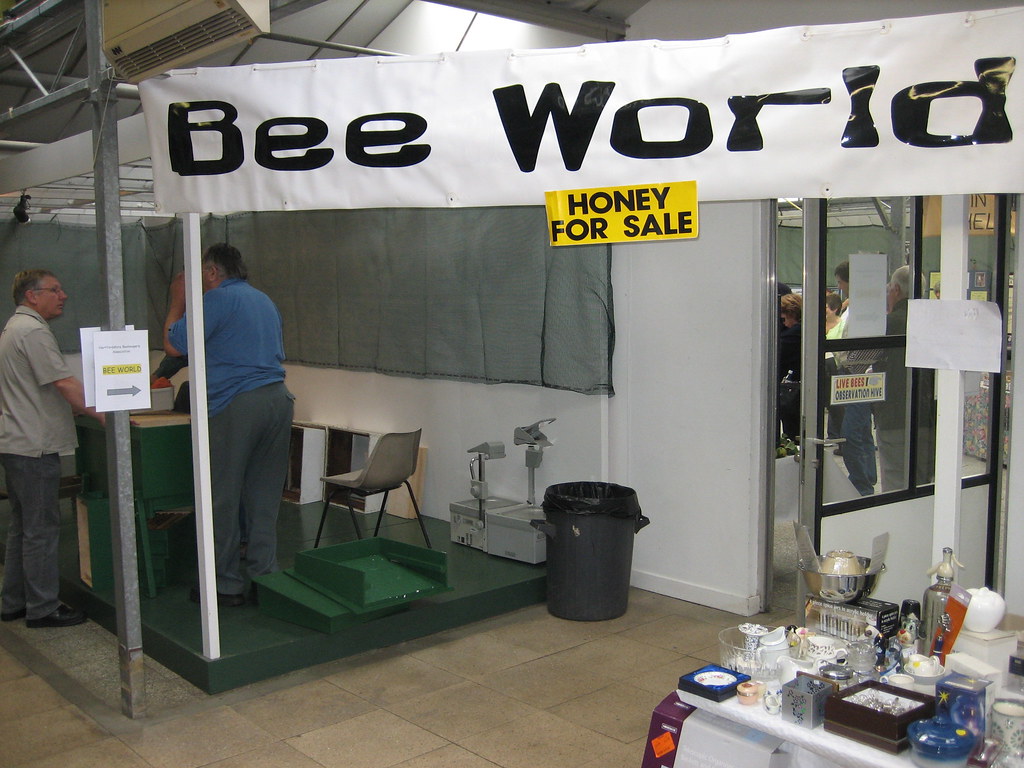
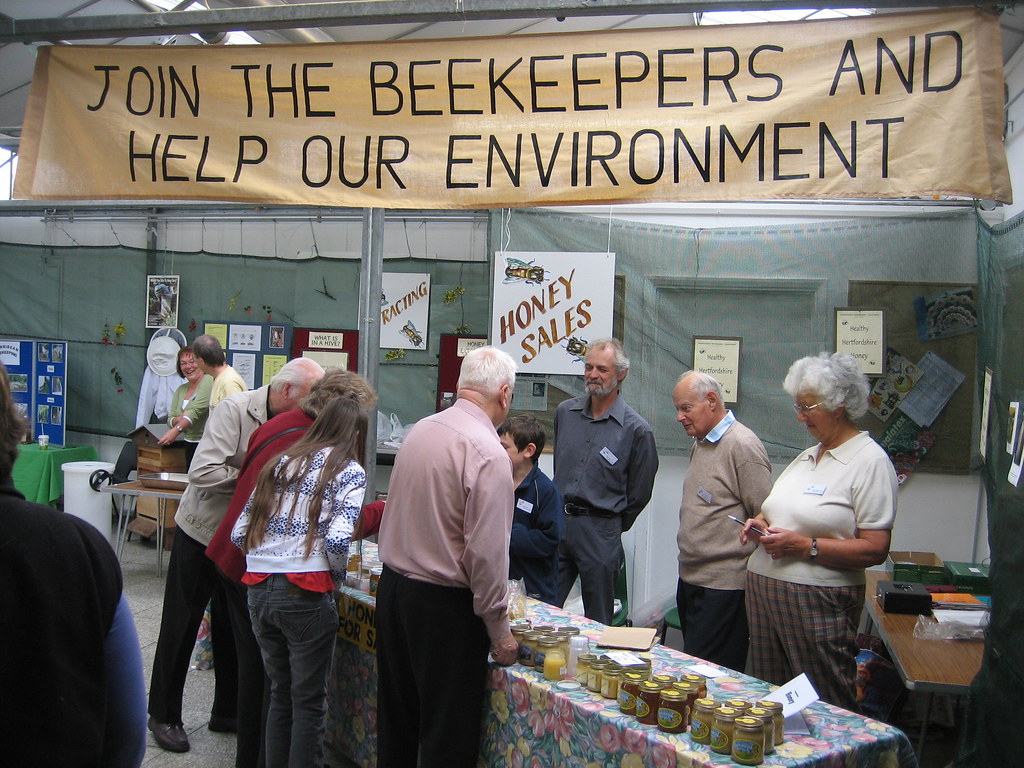
By the time members read this, the event “Bee World” will have happened, and I hope will be reported elsewhere,... I should warn North Herts. members that we are organising next year,!!! So I hope quite a number of you attended!

I can now mention the details of our first two Winter/ Spring meetings at The Friends’ Meeting House, Sollershott East, Letchworth, at 7.30 p.m. on Tuesday October 9th, and November 13th. 2007. Our new Chairman, Graham Beasley has been very active in persuading the attendance of two well known speakers to come and give us the following talks and promote discussion and to share experiences etc.
  • Tuesday , October 9th. Andy Wattam, the East Region Bee Inspector will give a talk entitled, “Integrated Pest Management, (with reference to EFB and Oxallic Acid Treatment)”.
  • Tuesday, November 13th. Martin Buckle, from Beds. Association, will speak about “Honey, ... it’s Bottling and Presentation for Showing”. Members are asked to bring samples for, what might be called “Constructive Criticism”!!!
PLEASE NOTE: Members from other areas are cordially invited to both these meetings, as always.

Let’s hope we get plenty of support for both these talks as both speakers are coming some distance to be with us, and I’m sure we are in for two very interesting evenings.

I’ve ‘blathered’ on rather a lot, and I know you just can’t wait for the answer to last month’s puzzle!.. and with space at a premium, I’d better “get on with it”. The answer was “Four”. If you want to know how to get to this you will have to ring me!!!

Here’s a difficult one! What major scientific blunder did Shakespeare include in “Twelfth Night”?

Now finally:
“Laughter is much more important than applause. Applause is almost a duty. Laughter is a reward. Laughter means they trust and like you!” Attrib. to Carol Channing,... Star of US cabaret. b 1921.

Eva Crane dies aged 95

Eva Crane (12 June 1912 – 6 September 2007) was a researcher and author on the subjects of bees and beekeeping. She spent decades researching bees, traveling to more than 60 countries.
Eva Crane's Wikipedia entry

30lb honey buckets for sale

...from the Potters Bar area. Please contact the Herts Bees editor for the seller's contact details.

Foul brood or not foul brood?

by Paul Cooper

There was a strong, pungent, bitter smell from two of my five hives when I did an inspection at the weekend. So I called in Peter Heath (Seasonal Bee Inspector) given the recently reported outbreak of EFB near Lower Stondon in Bedfordshire. Anyone who suspects a notifiable bee disease should call in a bee inspector as you cannot be too cautious.

Thankfully Peter confirmed that it was just the smell of the Ragwort nectar that my bees had been collecting. He advised that I should have started varroa treatment sooner (end of July) but apart from this my bees are in good health.

NE Herts news by John Hill

Another Summer nearly gone, and what have we beekeepers to show for it? At least the colonies seem to be increasing in size and creating some food for the Winter, but the ‘Boxwood Bunch’ have not produced much crop worth extracting, although a couple of supers need some attention, mainly from swarms. The ‘indigenous’ colonies are just about pulling themselves together, but it’s getting rather late in the season, and we’ve now come to treatment time. I’ve had a go at making some Thymol ‘Patties’ this time. F.E. managed to get some crystals from Thornes (all done in a rush,.. the making I mean.. which beekeeper plans ahead?) Well, fortunately I decided to heat the fat in the kitchen, and to mix it with the sugar and Thymol outside on the lawn!! Organic Chemistry was my bete noir!! Good job I did, ... because the Thymol smell is very penetrable, and afterwards my clothes all smelt as though I just emerged from a heavy day on the ‘ointment’, and had to commit all my clothes to the wash, even down to my vest!! The ‘patties ‘ I created by scraping some on to ‘fairy-cake’ , greaseproof, papers ...32p for 100!! The paste was quite mouldable but I had to add about 30 grms more fat that the recipe amount of 200 grms to make it so. Let’s hope it does some good,..BUT don’t make in in the house unless you want to smell like a refugee from a chemical factory! I put 3 patties per hive, directly on top of the brood box (moving any sealed crop first!).

I missed some of the Summer meetings due to holiday and trips to family etc. but F.E. gave me some notes, which I repeat below verbatim:-
“At Roman Gorski's apiary meeting (a first for the North Herts Beekeepers), 13 visitors turned up, including welcome guests from St Albans. The rain stopped as we arrived, and started again as we were leaving. Somebody must love us! However, the conditions were not propitious for opening hives, so Roman showed us some of the more even-tempered colonies amongst the 30 or so at his crowded apiary. Despite this, several stings were suffered as a result of bees chasing us, presumably from the less well-tempered colonies.

There was plenty of evidence of good husbandry born of years of devoted experience. There was a wide-ranging discussion of many aspects of beekeeping, which was followed by a very agreeable tea which had been prepared under trying and windy conditions.”
I did go the Nortonbury meeting, along with about 15 attendees, including some new prospective members, also in attendance was Peter Heath who led the practical aspects and contributed markedly to the discussion.... “Thank you Peter, from all who went along”. We had some wonderful ‘al fresco’ refreshments.... shades of camping. The ladies did some very smart cakes and sandwiches,” thanks again”. About five members had their hives inspected, and all were thriving and in good order,....(the bees I mean!). One hive was abandoned tho’ and was rather overcome with moth and other intruders,... No bees!!!

There was also a meeting at Pat Veasey’s apiary, but unfortunately I cannot report on it as I wasn’t there and it’s rather along time back too. But no doubt the refreshments were excellent, as usual,...let’s get our priorities right!! Thanks to Pat and Jennifer.

Well, at the time of writing , our last meeting will be in two days. Andy Johnston is having a joint meeting with Beds, group. I’ll report next time.

Just space for last edition’s puzzle answer: "There is one sec. between two strikes, therefore it will take 11 secs. for the clock to strike 12 times".

And a little more! "If one half of 24 were 8, what would one third of 18 be?"

Did you know that the word........"Uncopyrightable" is the longest word in ‘common use’ with no letter appearing more than once. Here’s another long word of 45 letters which is in some dispute because it is really a made up word........ "Pneumonoultramicroscopicsilicovolcanoconiosis", which is a lung disease,... perhaps our bees could get it?!!!

West Herts news by Brian Norman

(The following was filed for publication in the July/August edition of the newsletter but missed the deadline. Then, because of the long gap, it got mislaid for the September issue. Apologies once again West Herts members.)

I think the less we dwell upon the previous weeks weather the least said the better. Croxley has the benefit of being surrounded by numerous lime trees that require a rather humid atmosphere to fully develop their flowers and nectar flow. A bright interval in the weather allowed the meeting on Saturday 7th to continue so that members could examine the colonies, especially the nucs that were laid down in April.

The queen right nucs showed good signs of brood, in full brood crescent pattern, with the queen calmly moving about the frames. With a full flow of nectar now keeping the foraging bees busy therefore enabling the colonies to make up for the June gap thereby replenishing their stores.

The largest colony was recovering from a departing swarm but upon a closer inspection of the brood area it was apparent that a few east swarms had also departed. The new queen was not yet visible but one queen cell still remained intact amongst the many hatch cells.

The progress of the societies new shed continued apace, with the old shed now being fully cleared, with the societies treasures now carefully sorted and stored until the new shed is erected. At the next meeting we hope to lay the necessary base of blocks and wooden joists to give a firm foundation.

Besides the general clear up we now hope to plan for next year's programme of colony rearing for the purpose of assisting new members in having their own colony with a know pedigree.

Hitchin Bee Centre news by Robin Dartington

Work has continued through the summer on constructing the Bee Centre – the lawn, fence and bee shed. Choosing to make the Shed from planks, rather than buying ready-made, was brave – it has produced a building exactly as needed but nailing up under site conditions has been laborious. Still, almost there now. Expenditure on materials to date has been £1,450 – the final cost after installing 8 hives will be a bit over £3,000. That is my limit for investment in this scheme as a ‘social entrepreneur / non-profit developer’ – so continuing the plan to develop a Meeting Room/Exhibition, Community Bee Garden and Bee Plant Nursery will depend on obtaining grants in advance. The new association will also have to get support to buy out the facilities already created for the Bee Centre or be burdened by debt, with consequent need to be more ‘commercial’ in its operations than originally intended.

Obtaining guide prices for the major grant application to be made at end September must start in earnest. Work will include: tree surgery; earth moving; water supply; supply/erection of log cabin (Meeting Room/Exhibition); Exhibition design/install; design/build of garden; design/build of horticultural area (Plant Nursery).

Jif Smart, a Hitchin-based gardener, has been identified to design, build and later maintain the garden. John Cliff, a Hitchin-based Horticultural Therapist, will design the Plant Nursery – and hopefully use it later for a project with disadvantaged people. Gillian Sentinella will advise on design of the Exhibition – she was involved when Beds BKA invested over £2,000 a couple of years ago in creating a Bee Gallery at Stockwood Park Luton - soon to close when the Museum is upgraded to a Discovery Centre (incorporating a new Bee Gallery) with a £6m Lottery grant.

There was no response to the invitation in July ‘Herts Bees’ to join in pre-design research, or to suggest additional sites worth visiting, so the group continues on its own.

Peter Bracey caught working on the Bee Shed


Some strong colonies finally did well in 2007 – Robin Dartington’s best

SE Herts news by John Mumford

Peter Dalby volunteered to host the July Apiary Meeting when no-one else had made their apiary available to fill the vacancy. I was then very disappointed when Peter rang me on the Friday evening before the meeting to say that no-one had phoned to express their intention to attend the meeting.

I was in favour of cancelling the meeting, but Peter said he had people from other divisions who had said they they would like to come and he didn’t want to disappoint them, so the meeting went on. As always Peter had a lot of different things to show us, and as always Barbara had prepared her usual array of refreshments. Eventually just four members turned up after phoning Peter on the Saturday evening and Sunday morning. Now I don’t think that is acceptable! When someone puts themselves out to host an Apiary meeting they should not be put under the added stress of not knowing how many people will attend till the last minute, in order that proper provisions can be made and lots of food doesn’t go to waste. Please be more considerate and appreciate that these events are for your benefit and the costs are borne by the person hosting the meeting.

The ‘Bee World’ event on 22nd September starts at 10am with setting up from 8am. SE Herts will be providing an Observation Hive and I would like a little help at sometime during the day. Any Volunteers? See elsewhere in this Newsletter regarding Produce for Sale and other details. Those manning the exhibits will get free entry but ALL others will have to pay the normal entrance fees.

The next Apiary Meeting will be at the Association Apiary on Sunday 9th September at 3.00pm. The Harvest Supper will be held on Saturday 13th October at 7.30pm. The Next Committee Meeting will be held on Monday 3rd September at Heaton Court.

St Albans news by Anne Wingate

I know many members are experiencing a dilemma of when to start treating for Varroa and feeding. The unusual late nectar flow has confused the normal timings. It just goes to reinforce what long standing beekeepers have said all Summer 'Beekeeping is a life long learning experience'.

Some new beekeepers are extracting honey, if you need a small number of jars I may be able to help (phone ☏). While you are extracting please put aside one or two jars of honey to enter our low-key honey tasting/ judging evening on 7th Dec. We look forward to sampling the many different flavours.

The other meetings plan for the autumn are aimed at giving a more in-depth understanding to some of the subjects covered in the Beginners Course at the beginning of the year. Your Committee have decided not to run a Course in 2008, but are welcoming new enquirers to attend the Apiary sessions each week and come to the evening meetings.

The meetings are at United Reformed Church, Watford Rd. Chiswell Green St. Albans at 8 pm.
  • 26th October - Swarming
  • 12th November - Anatomy of the Bee
Please join us, put these dates in your diary now.

Unused honey jars - free

We have two boxes of new unused honey jars of 1 lb size left over from our past bee keeping in Hertford some years ago. There may be as many as 24. If any of your members are interested in them perhaps your member could phone us on [email Editor for details]. We live in Tring. We would not expect payment for them. Mrs. P. Yates

We the undersigned petition the Prime Minister...

...to Increase funding for research into honey bees at the National Bee Unit and other institutions.

The honey bee is an often overlooked but absolutely vital part of the environment and agriculture. Bees are said to be worth about a billion pounds to agriculture and horticulture but their role in general pollination and the environment is beyond measure. Recent reports from the USA and UK about massive losses in bee colonies indicate that urgent research needs to be done to understand and counter this trend along with combating the rise in antibiotic resistant varroa mites and other threats. However research funding to the National Bee Unit and other institutions by DEFRA has been cut hugely in recent years with the loss of many jobs and the consequent dispersal of knowledge. This petition urges the Government to put significant extra money into the relevant organisations that study bees and work with beekeepers both commercial and amateur to ensure that this essential creature is protected and encouraged.

Click here to 'sign' the E-Petition

Microscope Fair

I am not a beekeeper, but I belong to the Quekett Microscopical Club - a long-established society for amateur (and some professional) microscopists.

You might be interested to know that the Club is having a "bring and buy" fair called "Microscopium" at St Stephens Church hall, Watling Street, St Albans on Saturday 20th October, 10.00-16.30. If any of your members was interested in acquiring a secondhand microscope or related equipment at a reasonable price, this might be a good opportunity.

Presumably you have an e-mail system for passing on this kind of information to members. With thanks.

Yours, Mark Shephard

Country File BBC 1 Sunday 29 July 11am

Media interest in bees and beekeeping continues at a high level. Our Research Colloquium, which as you will read shortly in BBKA News was a great success and has contributed a further impetus. As a result, Country File has filmed a short feature on bees and bee research which will be transmitted this Sunday, 29 July at 11am BBC1. It features input from ourselves, Defra/NBU and Sheffield University and hopefully will make our case for more research funding. Please inform your members of this broadcast which I am sure will interest them.
Best wishes
Tim Lovett

Disease Alert

Please be advised that the following disease has been identified:

This is located in the following 10km Map Square(s):

Square Number: TL13
Square Name: LOWER STONDON (Beds / Herts Border Square)
Disease: EUROPEAN FOULBROOD

Beekeepers and Bee Farmers in this area should be vigilant and examine their colonies carefully and advise us if they have any concerns. If associations have new members within this area of whom we may not be aware - please advise us.

Priority Inspection Visits of apiaries will be continued in the area surrounding those where the disease has been confirmed.

Your help and cooperation is, as always greatly appreciated in completing these visits as swiftly as possible.

Useful Contact Details:

Peter Heath - Seasonal Bee Inspector: 01279 843177
Andy Wattam - Regional Bee Inspector: 01509 881092
E-Mail: A.wattam@csl.gov.uk
National Bee Unit: 01904 462510 - E-Mail: Nbu@csl.gov.uk

Thymol Varroa Treatment

Ingredients
100 grams Thymol crystals (handle with care - avoid skin contact)
200 grams PURA or other pure vegetable fat (no additives, preservatives or emulsifiers)
700 grams Castor Sugar
(sufficient for about 12 colonies)

Instructions
Melt the PURA in a saucepan and allow it to cool until warm to the touch. Put the castor sugar into a plastic container and thoroughly mix in the Thymol crystals until all lumps are broken down. Add the sugar/Thymol mixture to the melted Pura and mix thoroughly until the mixture is the consistency of a paste.

Storage
If well sealed the mixture may be stored in the bottom of a refrigerator for up to 12 months.

Usage
On a piece of grease-proof paper about 10cm x 15cm spread the mixture so that it is about 5mm thick and place on top of the brood frames. The Crown board should allow a bee space above the paste. All ventilation should be closed except a 10cm wide entrance. Refresh the mixture very two weeks until the drop falls below 2-3 mites per week.

The ambient temperature needs to be above about 15C unless the hive is insulated. Expanded polystyrene works well (about 25mm thick) and can be left on all winter.

Note: do not apply the Thymol treatement when supers are still on. It is also advisable to remove excess winter stores in the spring before the bees transfer it into the supers.

Hitchin Bee Centre - the debate part 8

By Oonagh M. Gabriel

I have been asked to comment on the ongoing debate on the Hitchin Bee Centre. Having read the dialog so far and feel I am treading on eggshells.

I can only base my comments on the articles that everyone else has seen and I have not seen the site.

Robin’s response, to Frank’s comments, says that North Herts committee was told the same day as Hitchin Council contacted him. Those involved should note that it was Hitchin that contacted Robin and not the other way around. I have not seen anything saying why Hitchin contacted Robin rather than North Herts BKA.

Derek Driver says ‘why not centrally in Hertford’. Why not, but it was Hitchin that offered the land not Hertford and Hitchin is not exactly Lands End. In essence the project appears to be a good idea but it will not run itself. If Robin, through lack of support, is left holding the proverbial baby then there should be no great surprise that he favours the Dartington hive. I wonder if William Broughton Carr suffered the same criticism as Robin is enduring now. If I had found myself in the same position as Robin I would have favoured the Jumbo Langstroth. Then there would have been those who would have said we must have Nationals. (Terrible hives: time we moved into the 21st century!).

The concept of the long, deep hive is not new. I have a few reservations on its design but, if you do not intend moving your hives about and follow the management techniques as recommended it is a very good hive.

Regarding the siting near allotments, I have visited an apiary south of the river that is actually on some allotments and I was given to understand that there have never been any problems. Maybe they have just been lucky. I admit to some concerns in these litigatious days but, I repeat, I have not seen the site. Perhaps eight hives is overkill but, again, I have not seen the site.

If it appears that Robin is pushing ‘his hive’ who can blame him? There would be no reason why other hives could not be on display but all working hives would have to be the same design. We all know the problems that mixing the different sizes and shapes can cause. If Robin is left doing all the management he is going to want his favourite hive, as I would want Jumbos.

I know nothing of fund raising but it appears that Robin was not asking for actual money just the support of a parent organization in order to apply for grants.

It is a great pity that a good initiative is in danger of floundering through what appears to ‘an outsider’ to be a clash of personalities.

I was at Stoneleigh at the weekend, on Exam Board business. Here is a photo of the BBKA apiary. Oh look, there’s a Dartington!


Hitchin Bee Centre - the debate part 7

Robin's comments on Peter Folge's letter (see debate part 5)

Peter touches a cord when suggesting Herts Exec moves beyond administration into improving bee keeping in Herts. And his target of raising better queens - breeding the Herts Bee - is spot on.

Using only queens that produce large, quiet non-swarming colonies does more to make bee keeping satisfying than any other decision a bee keeper can take.

I would happily allocate space on my 2 acre site for a mating apiary that could be flooded with top quality drones and would take the trouble to suppress drone rearing in any of my own hives with less than perfect queens. No doubt there will be negative comment about spreading diseases. Peter Heath would need to be involved.

Hitchin Bee Centre news by Robin Dartington

Holidays have interrupted work on completing the hives enclosure with the equipment shed. Building a shed from scratch is much more fun than buying one - but takes longer!

Application for grant from Landfill Tax will be made on 28 September to cover Phase 2: Community Bee Garden including Exhibition Room. The council, as landowner, will sign the application, adding gravitas and saving VAT.

The summer will therefore be occupied with research, design and costing, starting with visits to similar local sites. North Herts has an observation hive at Standalone Farm, Cambs. on display in a listed stables. Bedfordshire a display in Stockwell Park, Luton. South Bucks
has hives at the Rural Life Museum and at the Community Orchard in Milton Keynes. There is a new observation hive at the Science Museum, Kensington, shaped like a tree.

If anyone wants to join in the research or to suggest other places of interest, please contact robin.dartington (at) btinternet.com or phone ☏.

SE Herts news by John Mumford

The meeting at Richard Ludwell’s Apiary on Sunday 17th June was very well attended. Richard showed us two of his colonies in Jumbo Langstroth hives and two in normal Langstroth hives, the large frames make inspections quicker and created much interest. Pat had prepared some very nice Chocolate ‘Muffins’ and we all went home well satisfied. Many thanks to both Richard and Pat for a super afternoon.

After the promising start to the season in April, May turned out to be a DAMP SQUIB, and June to date hasn’t been much better. I swear the supers on my hives are getting lighter by the day not heavier.

Swarming has been a big problem for some this year and some new Queens have started to lay before getting mated because they couldn’t get out.

I took Garry one of our beginners out to look at a swarm I had been asked to deal with. When we arrived we were both a bit ‘Gobsmacked’ at it’s massive size. It was one of those biggys you only get on very rare occasions, hanging some 15ft. up in a Laburnum tree overhanging the pavement. When we went back in the evening to collect it I wasn’t sure if it would all go into my Smith brood box in which I had fixed a couple of frames of foundation (to stop them moving about in transit). It turned out to be a rope round he supporting branch and a big shake job. Now the books tell us how delicate Queens are, and that they should only be handled with the utmost care. The way that swarm hit the pavement and scattered all over the place was a bit scarey. We put the hive down beside the biggest clump of bees not having a clue as to where the Queen might be, or if she had survived the crash, and were thankful when they all began marching in like little toy soldiers, that is apart from a stubborn lot the size of a football that preferred to stay up the tree. We left the hive there to pick up the stragglers and when we arrived back the next evening the bees were all in the box and doing just fine. Some careless beekeeper has lost a very nice lot of bees and I’m glad. If all goes well then Garry is into beekeeping big time, and has a good yarn to tell! I suspect the bees will benefit from a dose of Thymol a couple of days before the swarms first brood is capped.

Please don”t forget the Broxbourne Council Open Day at Bishop’s College on Saturday 7th. July. If you have any hive produce for sale then contact Derek Driver on ☏. Produce must have have labels meeting the current regulations.

The next summer meeting will be at one of Peter Dalby’s Apiaries on Sunday 15th July (see enclosed map and details).

There is no Newsletter in August so I am reminding you now of our last summer meeting at the Association Apiary on Sunday 9th September.

SE Herts will be providing a Observation Hive for the HBKA ‘Bee World’ event at Capel Manor on 22nd September, a little help from members would be appreciated.

Remember to keep Saturday 13th October free for the Harvest Supper at the Hoddesdon Baptist Church Hall. The evening is completely FREE to members and their partners, and is a great opportunity to swap ideas and experiences.

The next committee meeting is scheduled for Monday 3rd September at Heaton Court.

St Albans news by Anne Wingate

Thank you to all the members who attended the Good Bee Husbandry day. Members attended from all Divisions except Barnet and SE Herts or did you not sign in? There were 48 beekeepers including some from Bedfordshire BKA.

We all learnt something and were lucky to have real specimens of EFB and AFB to look at and smell! Andy and Peter were impressed by the turn out, but still felt beekeepers did not realize the ever increasing responsibility DEFRA are passing on to beekeepers. I see Barnet BKA are holding their own Bee Disease workshop on 21st July.

St. Albans members will be pleased to hear that Andy was impressed with our Apiary, set-up and standard of equipment. Keep going. We do need a satellite Apiary, any suggestions of possible sites please let me know.

Our next meeting is 3pm on Saturday 7th July at the Apiary and the subject will be 'Preparing for Winter'. The Beginner Beekeepers will need to purchase white sugar after this meeting. All will be explained !

Welwyn news by Peter Mathews

Many thanks to everyone for helping to make our Apiary Day a big success. We were more, or less, on schedule excepting the last few visits. Huge thanks to everyone being at the right place on time. And, special thanks to Fizzi, Christine and The Folges for providing refreshment stops.

We had 14 people involved including 5 new or prospective members. I lost count of the number of hives. Varroa levels were very low, which is good. But, so were the number of strong colonies, largely because of varroa related winter losses through incorrect treatment last autumn. We will all do better this year, maybe.

The award for Best Hive again goes to Peter Hills......this was very strong, with lots of honey and the quietest, best behaved bees seen during the day. Peter is amongst a minority of small beekeepers to invest in a quality queen. The value of doing this was well demonstrated. Perhaps we should learn?

The most interesting colony was mine. This had two queens. The old light queen was in the process of supercedure as she was crippled and unable to lay. On the same frame we saw the new dark queen with recent brood and eggs following a gap of 2-3 barren weeks.

Diary Dates
Saturday 7th July - Apiary Meeting at Raffin Green at 10.30am ; Welwyn stand at 'Ayots Horticultural Show', Ayot Green, 2 - 5 pm. We need helpers for our stand during the afternoon.

West Herts news by Brian Norman

The apiary now has a few new members colonies and all are at differing stages of development and a recent inspection gave the new members present an opportunity to study the progressive stages of development in the new colonies. A colony from the previous year has expanded to give a small surplus of honey with a few Queen cells in the half brood chamber. A couple of frames with Queen cells were taken to make another nuc with the objective of making another young colony.

The previous meeting went well with the clearing out of old equipment and a few pieces were bought by members. There are still a few hive pieces left and if members are handy with woodwork skills they can be modified to suit a need.

North Herts news by John Hill

Unfortunately, this month’s contribution has had to be written well before the end of June because of an impending holiday, so I hope that readers will understand. In fact I can only report on the one meeting held at Robin Dartington’s Apiary at Letchworth. About five NH members turned up plus ‘an interested prospective’ member, but Robin had a number of “admirers/disciples” with him and it all made for an interesting afternoon. We examined about six or so hives, all with varying aspects of bee husbandry evident. One queen met her demise due to an unfortunate “slip” with a super box., but we did manage to mark about three or four queens with Robin’s special “Humbrol” paint, and we had to wait quite a while for it to dry. The hives were Robin’s ‘specials’ and there were many variants of occupancy, ranging from colonies on many/ few frames, and nucleus boxes perched on one another. Thanks to Robin for a great tea served ‘al fresco’ by his many ‘helpers’. We all went home replete, and the weather was extremely kind too.

As far as the bees at Boxwood are concerned ,we’ve had all sorts of problems, …artificial swarms that didn’t take, absconding bees, no queens, (even when frames of eggs and brood were introduced from alternative sources). Plenty of swarms to collect, …however, and lots of activity, BUT STILL VERY LITTLE CROP!! At mid June there seems to be some encouraging signs, but I think the bees have missed the ‘nectar boat’ and we shall have to treat very soon. Not much Varroa to be seen at this time. Still, I expect all will change in the coming month!!

The Hitchin Bee Centre seems to have attracted a lot of “blog” attention, to say the least! I don’t intend getting embroiled in the discussion, but I would say that many facts have been distorted, and certain ‘faits accomplis’ were very evident in the printed matter that has appeared during the past month… There’s a saying… “Don’t confuse me with facts once I have started the job” …(‘Nuf said!!).

The meeting in July will be on the 14th, at Nortonbury apiary, where about six members have their hives. Please note the time …14.30 hrs. It is hoped that the Bee Inspector, Peter Heath, will put in an appearance, and lead the proceedings. At this point in time I do not yet have the date for Andy Johnston’s meeting in mid August… (There could be some frantic ‘phone calls?…).

The answer to last month’s puzzle regarding the clock, and how many times the minute hand passes the hour hand between noon and midnight, was surprisingly,… Ten times. "Go on check it!"

Here’s another for your consideration:- “A clock takes five seconds when striking 6. How long will it take when striking twelve?”.

So, finally:
The men that worked for England
They have their graves at home:
And the bees and birds of England
About the cross can roam.

But they that fought for England,
Following a fallen star,
Alas, alas for England
They have their graves afar,

And they that rule for England,
In stately conclave met,
Alas, alas for England
They have no graves as yet.
G. K. Chesterson. 1874-1936.

Honey for Sale in Hertfordshire

Many people ask me where locally produced honey can be purchased. They often ask at this time of year because they believe that local honey can help to alleviate hay fever.

So a map has been created for Hertfordshire beekeepers to indicate where their honey can be purchased. The map can be found by clicking here. There is a permanent link to the map from the Links section (lower down on the right of this page).

If you want your honey outlet to be added to the map, please send me the address of where it can be obtained. The intention of the map is to show where local honey can be purchased so please only send me addresses that are within a few miles of your apiary.
Paul Cooper

Hitchin Bee Centre - the debate part 6

Robin replies to Frank Everest (see debate part 4)
Frank forgets:
  1. The Council called me at 11am on 14 February and I passed on the offer to a meeting of NHBKA the same evening. Call me ‘Lighting’ but the project was not a ‘fait accompli’ after eight hours. The offer however was derided instantly by the Treasurer: ‘Ridiculous to put bees on allotments; you will not get any money from me’. The outright rejection was based seemingly only on prejudice (allotments are gardens for the common man) – the site had not been visited and there was no discussion. Normally, an association would jump at such an offer and set up a branch apiary run by an Apiary Manager who would be a member of the Committee.
  2. One week later, I sent the Committee a ‘Preliminary Outline Proposal’ to illustrate how the site could be developed through a working group – nothing had then been agreed with the Council. Frank was the only member to visit the site and provide useful comment. The Committee’s decision – ‘it would have to be a separate organization, financed apart’ was clearly reported in April Herts Bees. It is true that I went along with the decision – looking around the room it was obvious that the Committee lacked the will to make an effort. Rather than see the site turned down, I was left taking the tenancy myself and getting the first grant to reclaim the former rubbish dump.
Frank seems to have no idea how projects are financed. A project has to be locally supported and be sustainable through a self-perpetuating community group if it is to be eligible for public sector or charitable grants. There is no possibility of this being “Robin’s” project – I am just the project champion, in default of North Herts which seems only capable of complaining after the bus has left.

The allegation that allotments are not safe for bees is not worth discussing. BBKA has no objection - nor has the National Society of Allotment and Leisure Gardeners. It is quite normal to find hives on allotments, with no trouble. However, beekeepers who do not keep bees quietly had probably better stick to using the large private gardens they are fortunate to enjoy.

The need to establish a new organization was unexpected as the Bee Centre aims to do nothing that other branch apiaries already do – only to do it all in the most up-to-date way. Dartington hives are an example – the long box is the result of butting two deep Nationals together and so is only a modern version of the National hive that is easier to manage. The honeyboxes are only half-length National supers whose reduced weight respects the softer backs of today’s beginner beekeepers. People have come from Cornwall and Wales to try the hive in my apiary – pity that shorter trips within Herts are less common.

Frank regrets there will be a new beekeeping organization offering choice to beginners. It was the Committee’s own decision.

Yamada Bee Farm 'Bee Beauty Magazine'

Are you an attractive woman aged 30 to 59 who keeps bees?

A Japanese company called Yamada Bee Farm, that produces cosmetic products from honey, is looking for women beekeepers in their 30s to 50s to feature in their bi-annual cosmetics division magazine. They want beekeepers who have an interest in grooming and appearance.

They are particularly interested if you use honey related products yourself. Beekeepers who make candles, creams or similar using honey or who like cooking with honey are also welcome.

There will be a prize of £50 for each beekeeper used.

Click here for more information on Yamada.

If you are interested in taking part, please contact Kumi Andoh on ☏ or kumi@bakerbates.com

Bees on TV and radio

On TV:
  1. Springwatch, BBC2, tonight (31st May) at 8pm.
  2. Ever Wondered About Honey, BBC1, 9 June at 11.30 am
  3. Market Kitchen, UKTV, in about 2 weeks with Gordon Ramsey, Clodah Mckenna and Philippa O'Brien (designer of Urban Beekeeper garden at Chelsea).
And on Radio 4 soon:
  1. Claire Waring on Open Country
  2. Norman Carreck on the Food Programme

Hitchin Bee Centre - the debate part 5

By Peter Folge
"The Bees Knees"
Welwyn Beekeepers Association

Hi All,
Having read the newsletter as far as The Hitchin Bee Centre is concerned; In my mind it is stupid for members to turn their backs on someone who wants to bring beekeeping into the public eye. In my own experience as more city/town folk spread on an ever expanding sprawl into the countryside many have no idea between a wasp, bumble bee, honey bee or hoverfly. OK this is nothing new but at the same time Hertfordshire is increasing in wealth and the public are becoming increasingly concerned in what they eat and this brings in us beekeepers. The public are becoming more aware of natural and organic products and it's health benefits.

I myself have never seen a Dartington Hive (other than a photo) and I'm sure neither have most members. I truly believe we all should see it first hand before commenting and fussing about which hive. If I had my way they would all be WBC. Hmmm - but then imagine when moving equipment. What a nightmare this would be. Therefore most of the hives I've seen are based on the National.

Of cause I'm sure members who are objecting to this project possibly are not happy with a little unbalance in the association or even in their lives. The worst thing that can be done is to cause a splinter in our organisation's structure and look in the public's eye as a totally unorganised.

Regarding time & money; I think we have it good when it comes to membership fees. (I'll still complain though). It's up to Hertfordshire's members to join in and make a little more commitment meaning - come along and introduce yourselves at local apiary meetings - nothing more required, but please make the effort, after all that's what membership is all about.

If Robin Dartington can find volunteers to run the Bee Centre, consider public safety and the allotment owners are in agreement, then why are members so worried about this project? A little more fund raising really won't go a miss, would it? Selling products from the centre would probably nearly fund the project in itself.

Let us set it up on a trial basis say 5 years funding and if we are not happy we can then consider alternatives.

Ideally I have always wanted to set up a bee breeding project in Hertfordshire. Would anyone like to commit themselves? It would not cost a thing except time and effort and a little friendly communication. Then maybe we will, like the Beekeeping Grand-Masters before us....inspect open hives on a hazy weekend afternoon in nothing more than shirt sleeves and a small puff of rolling smoke... Well, for the moment I have 2 hives exactly like this and maybe more by the end of the season?

Let us see what this weekend's Apiary tour holds for us in Welwyn.

All we need is a sunny day!

Hitchin Bee Centre - the debate part 4

By Frank Everest
Robin makes a number of points, many of which I believe to be mistaken.
I feel that his complaints against the HBKA executive committee and the NHBKA Committee should not go unchallenged. I strongly support the concept of the Hitchin Bee Centre, and so has the NHBKA committee, as he should have recalled, having been at the meeting where it was discussed. We did not agree to setting up a new organisation – if Robin thinks we did, he was hearing what he wanted to hear!

Having retired as NHBKA Chairman at our last AGM, I stress that these comments reflect only my own opinions.
  • Robin asserts that “North Herts’ decision that Hitchin Bee Centre should be a new organisation”. I think not: at our committee meeting, we declined to support the Centre with finance, but supported his project. Since it was on our patch, we understood that the decision might suggest to outsiders a lack of enthusiasm, but we had not been involved until Robin had made all his decisions, and so felt aggrieved that we had been involved without prior consent.
  • Robin’s concern to get NHBKA or HBKA support is all about getting money for his project, and so he justifies a new organisation to act as a “host” to sponsor or support getting external funding. The fact that I refer to it as “his project” and not “the HBKA’s project” says much about his problem. Derek Driver’s observations reflect that issue, too.
  • I quite understand that Robin is dismayed by the NHBKA and the executive of the HBKA not promising to support financially or functionally the Hitchin Bee centre. He should understand that their reluctance might stem from the fact that they feel they have been steam-rollered into agreement because he has gone ahead with arranging finance, access, etc., before getting any go-ahead from either organisation. Had he shared his vision and requirements before firming up his plans with the local authorities, etc., they would have had an opportunity to criticise and change the scheme to meet their reservations. Having done so, they might have been keen to go along with plans for which they felt some degree of “ownership”.
  • He asserts that the NHBKA and the HBKA are not fulfilling their duty as charities to “educate and further beekeeping”. The majority of the NHBKA members’ subscriptions are taken by the BBKA, whose aims and objectives I believe fulfil charitable status requirements. So, I would argue, the NHBKA also fulfils its charitable functions as a result of its sizeable contributions to the BBKA, as well as its own contributions to external education, swarm collection, etc., and I totally reject the suggestion that our charitable status is “fraudulent”.
  • I have misgivings, which I have shared with Robin, about the siting of the Centre. He has modified his plan significantly since I offered my opinions, but I still wonder whether the allotment holders will be as sanguine as he thinks they will be when they are getting stung on bad days. It simply won’t wash when he suggests that we should install “quiet bees”. Like Derek Driver, I wish I could share his optimism.
  • The undoubted enthusiasm he has raised with a number of people (not principally NHBKA members) is praiseworthy. However, I have my doubts about whether the initial enthusiasm will be sustained by sufficient people on a weekly basis (as he suggests) at the out-apiary when swarms or stings are being endured by the allotment holders.
  • The NHBKA Committee, at the meeting Robin attended, expressed severe reservations about formal involvement with the Bee centre because of our worries about risks to the public (amongst other things). Since my wife had a near-death experience of anaphylactic shock following two stings at Boxwood a couple of years ago, we all now understand that beekeeping cannot be seen as low-risk. The NHBKA Committee seemed to want to avoid carrying any shared responsibility if a disaster struck a member of the public. Our collective public liability insurance would need to be copper-bottomed if someone actually died close to the Bee Centre, leaving aside the stress on our consciences if it happened. I doubt whether the Federation of City Farms and Community Gardens can Bee Diseases and individual public liability insurance cover.
  • I understand Robin’s enthusiasm for promoting his long deep hives on the site. I have one myself, and appreciate its advantages, but also its drawbacks. I feel that management of the double-ended hive is more complicated than management of standard hives, and the Long Deep is not ideal for beginners.
  • As Derek has pointed out, Robin’s enthusiasm for Long Deep Hives has clouded the discussions. Inevitably, Derek reflects others’ suspicions that Robin’s real motive in setting up the Bee Centre is to sell and advertise his own product, and their resentment at feeling used. I hope the suspicion is without basis, but surely Robin can see that his involvement and evangelism could be biasing a rational assessment of their suitability for the Bee Centre?
  • For example, it’s a pity he didn’t plan to add, at the most, two Long Deep hives to a collection of National, Commercial, and WBC to show the public what is available. The double-ended exits on the Long Deep hives will be a big disadvantage on the site Robin has chosen because it’ll be impossible to aim all the hive exits away from the nearby allotments and over the river. This drawback can be avoided with single entrance hives.

I’m sorry to sound so negative, but I do feel that Robin has brought his problems in getting Hertfordshire beekeepers’ support on himself. He has not brought us into his planning before we found we were being asked to agree.

The NHBKA has a long history of happy dialogue and continued support from its members. It has not been prone to splitting or schism – things which are always apt to happen when topics are not discussed openly in a timely fashion.

Robin seems to be seeking to split the membership into those who support him (including non-members of the NHBKA who cannot be aware of the effect of their involvement) and a part of the NHBKA membership. He seems to think that a new beekeepers’ association might afford him the backing to make grants available. It might indeed get the money, but such a schism is unlikely to sustain long-term support for his project from either camp. Thus the success of the Bee Centre could be prejudiced, and that is something I regret.

West Herts news by Brian Norman

(The following was omitted from the June newsletter. Apologies West Herts members.)

Due to the change of weather, the May Apiary meeting was limited to a brief hive inspection. A preliminary look under the crown boards disclosed that a member's colony was now in need of extra space for the spring honey flow. A super was to be made up and placed on the hive during the following week. The belated spring rain has freshened up the local plant life, which seems to have already given the bees a boost to their foraging.

The next meeting in May is where the Association is holding its sale of equipment, this being the prelude to clearing and sorting of the shed that hopefully should be replaced during June.

The Apiary is looking for new swarms to boost the in-house colonies, also a reminder to those members who wish to place one of their own colonies in the Association Apiary, please contact the Apiary Manager.

The Garden for an Urban Beekeeper

The first garden created for the British Beekeepers Association (BBKA) at the Chelsea Flower Show shows how to create a productive and safe area for bees in an urban environment.

Without bees there would be very few flowering crops. Today 60% of our food plants depend on bees especially tree fruit, soft fruit, salad crops, beans and pears. No bees – no healthy diet.

The article continues on the BBKA website.

Philippa O’Brien (right) explains her garden design to BBC Gardeners World presenter Carol Klein.

Bill Turnball (second left), Tim Lovett (BBKA Chair, right)) with the garden designer Philippa O'Brien (centre) and Clare Waring (Editor Bee Craft, left)

Professor Lord Robert Winston and other famous faces were also present!

Pictures 1 and 2 by Robin Dartington. Picture 3 by Clare Waring, Editor Bee Craft.

What Services Should An Association Offer Its Members? by Robin Dartington

Forming a new organisation to run the Hitchin Community Bee Garden is an opportunity to define the services that aspiring beekeepers need under modern conditions. Here is a first list. How does that compare with your local association? More suggestions, please!

The merely interested:
One-to-one introductory talk; a first experience with handling bees; all questions answered; advice on how to go further.

Beginners:
Training course; loan of trial hive; advice on buying equipment; matching buyers and sellers of used equipment; help with finding a site; supply of a nuc; mentoring; liability insurance.

Improvers:
Regular (weekly) demonstrations at a central apiary of the seasonal tasks; trouble shooting improvers’ problems; lease of extraction room; structured winter lecture meetings.

Aspirers:
Reference library; matching tutors to candidates for BBKA modules; arrangements for taking exams.

Regular beekeepers:
Bulk collection of wax for conversion to foundation; supply of frames/foundation/jars/ varroa treatments; supply of BBKA/DEFRA leaflets; annual review of the association’s written policies and programmes at AGM; social opportunities to visit and meet other members; co-ordination of car-sharing to beekeeping events; emergency cover (inspection of hives when a member is ill or away); 2nd opinion on suspect disease; co-ordination of visits by Bee Inspector; bulk collection of surplus (jarred) honey for central sales; annual high-level bee lecture as a contribution to a co-ordinated programme of Spring Bee Days shared with neighbouring associations (say Middlesex/Herts/Beds/Bucks/Cambs).

Distressed public:
Nominated Swarm Collection Officers; advisory service on problems with bees in wrong places; advice on bee stings.

National infrastructure for beekeeping:
Co-ordinated representation of views to BBKA/DEFRA; support for nation-wide PR campaigns and recruitment strategies; support for national research programmes.

News from Hitchin Bee Centre by Robin Dartington

Following North Herts decision that Hitchin Bee Centre should be a new organisation, HBKA was consulted through its Executive Committee on how HBC should be related to HBKA – possible a new branch? ExCOM was also asked if it would support establishing the Centre , in particular over making grant applications. North Herts representatives reiterated that NH did not want to be involved in any way and no decisions were taken.

A new organisation cannot apply for major grants without a parent. As no part of the beekeeping system in Herts is willing to support the new organisation, the project will switch emphasis from a beekeeping site with a bee garden attached to a bee garden with an apiary attached. Hitchin Community Bee Garden (HCBG) will join the Federation of City Farms and Community Gardens who accept new members with no fuss. FCFCG also understands funding projects – it gets only £10,000 pa from members’ subscriptions and raises another £490,000 by its own efforts.

Despite its tiny size, HCBG will strive to be a fully-fledged association for beekeepers, so offering an alternative to BHKA and its branches. This is in line with modern thinking that the consumer should have choice – competition increases efficiency and drives down costs. The scope of services HCBG will aspire to offer its full members (The Partners) and associate members (‘customers’) is outlined in a separate article.

The Constitution of HCBG will enable it to co-operate with other organisations that share its aims, so opening the way to re-joining beekeeping in Herts. HCBG does not want any unnecessary friction within the craft of beekeeping – but the condition ‘share its aims’ must be applied strictly. There is a problem. The representatives of at least two of HBKA branches have stated flatly that their members are interested only in keeping bees, not educating the public. This is of course absolutely fine as the position of an individual beekeeper – anyone can join a rugby club but decline to play for the team. It is another matter however when this becomes the official position of an association affiliated to BBKA and trading on its name. The Objects of BBKA are and always have been ‘promoting the craft and educating the public’. The education objective makes BBKA charitable – and public subsidy can be claimed as Gift Aid. An association that has dropped its charitable objectives can be seen as acting fraudulently if claiming Gift Aid – and that could affect HBKA as a whole. So should such branch associations be allowed to remain affiliated to HBKA /BBKA? Expulsion would not mean members had to give up beekeeping – DEFRA estimate there are far more beekeepers outside BBKA than are members. It would however be a step towards revitalising beekeeping in Herts – and enable HCBG and HBKA to negotiate a co-operative relationship at some time in the future.

There is some urgency as HCBG will want to refer visitors to local associations for example beginners’ bee courses (and not send all to Bedfordshire) – so the problems with HBKA branch associations has been raised with the General Secretary and the Chairman of BBKA. A request for an investigation will be discussed at the BBKA Trustees Meeting on 7 July.

Hitchin Bee Centre pictures

by Robin Dartington

Bee fence takes shape with Bee Lawn beyond

Bee lawn lying quietly on the river bank

Hitchin Bee Centre - the debate part 3

Robin Dartington replies to Derek Driver:
Derek certainly has misunderstood the project. I would have been happy to explain if he had contacted me, better visited the site.
“The Dartington Apiary” would usually mean my private apiary in Letchworth with 20 Dartington hives. The site in Hitchin is being developed by four beekeepers who live locally and is called ‘Hitchin Bee Centre’ – quite different.
The local Council offered a free plot for beekeeping to enhance its allotments. It would be right for Hitchin beekeepers would look for a site at Hertford only if Hitchin’s allotments were relocated. Hertford beekeepers however could start now.
The site is so ideal for public access that, rather than keep it private, it gives opportunity for a ‘public face’ for beekeeping – where the public can get a first impression of that may lead to active participation. North Herts does not want to be involved so it will be a new organisation.
People are not interested in practical details at a first visit– that comes later, as part of a beekeeping course. So there is no need for a ‘museum’ to show all types of hive. Many recreational beekeepers now favour Dartington hives as they are easiest to manage with minimum disturbance to bees and to avoid losing swarms. Barnet has just switched over its teaching apiary.
Educating the public for free is ‘charitable’ and supportable by other charities and charitable trusts. HBKA’s Constitution specifically states its Objects: ‘to promote and further the craft of beekeeping and the education of the public therein. ….the Association may co-operate with bodies with kindred interests and make affiliations with such bodies as appropriate from time to time’. I have therefore asked HBKA how it would like to relate to the Centre – in particular, whether Hitchin Bee Centre would be acceptable as a new branch of the HBKA - and whether HBKA would be willing to support grant applications (a new organization requires a parent body with three year accounts). A nominal grant of say £50 towards the costs of making grant applications would cost HBKA 20p per member – and associations often help start-ups by loaning hives. But no decisions were taken.
Derek fears older members might leave if funds were applied for charitable purposes but he should note that new beekeepers now avoid associations that provide few services. Of the four Hitchin beekeepers developing HBC, one has joined Barnet, one Beds, one St Albans.
Derek asked if I had explained that a swarm might cross the allotments that did NOT come from a nearby hive. No - educating the public in the behaviour of bees will depend on completing the Centre. My present concern is to raise money to develop the site in accordance with the Tenancy Agreement and the Permission to Keep Bees.
Robin Dartington, 27th May

Hitchin Bee Centre - the debate part 2

From Liisa - a local beekeeper:
The teaching of the traditional art of beekeeping is becoming more important, as the industrialization of our food goes marching ever on. The recent national press and television programmes have done much to bring the honeybee and beekeeping to the attention of the public, increasing the awareness of the critical importance of bees in the ecosystem and the possible threats of CCD.
The opportunity to have a Bee Centre in Hitchin was originally suggested by the local council and has been endorsed by its environmental health officer subject to strict conditions, and is welcome. It is also great to know that Defra’s bee unit top man and the BBKA’s Apiary Manager, both support the Bee Centre at Old Hale Way Allotments.
The interest and response from the allotment holders has been very positive, including the positive attitude to the possible risks, with the location of the Bee Centre to the allotments and the risk control measures that are to be taken. The donation of the woodwork for 8 hives from a national supplier is also very generous.
However, what is surprising is that no-one from the Herts beekeeping community, not involved in the project, has come to visit, given the interest. I am sure they would be very welcome. It is coming to conclusions without all the facts that is a great way to miss out on an opportunity. There is a great wealth of experience that could be contributed to the Bee Centre and the development of more Educational Bee Centers across the country, giving local people the opportunity of learning about bees and maybe experiencing beekeeping before committing to something they are not sure about.
Liisa
Just a local Beekeeper

Notes from County Executive Meeting

Bee World on Saturday 22nd September 2007 at Capel Manor will be co-ordinated by Dennis Osborne of Bishop's Stortford. As Divisions may be approached for ideas or help by Dennis, please give assistance as it will be your Divisions turn in the future. The Divisional rota was passed at HBKA AGM.

Divisional Annual Rota

PresidentPublic Exhibition
Barnet20092013
Bishops Stortford20102007
North Herts20112008
SE Herts20122009
St Albans20132010
Welwyn20142011
West Herts20152012

Proposed by David Wingate and seconded by Paul Cooper and accepted nem con.

I am grateful to Dennis and Bishop's Stortford Division for overcoming the initial difficulties of finding a co-ordinator.

Robin Dartington's project of bringing bee keeping to the general public with the setting up of Hitchin Bee Centre also requires support.

New projects and ways of moving events forward often appear difficult and to some impossible, but life moves on. Sometimes we need to make a positive leap into the unknown to reach a goal. With no faith or vision into the future, how would man have achieved so much from simple hunter gatherers to now.

Anne Wingate
Chairman HBKA E.C.